


Green Accountability: Making Climate Finance Work Better for People
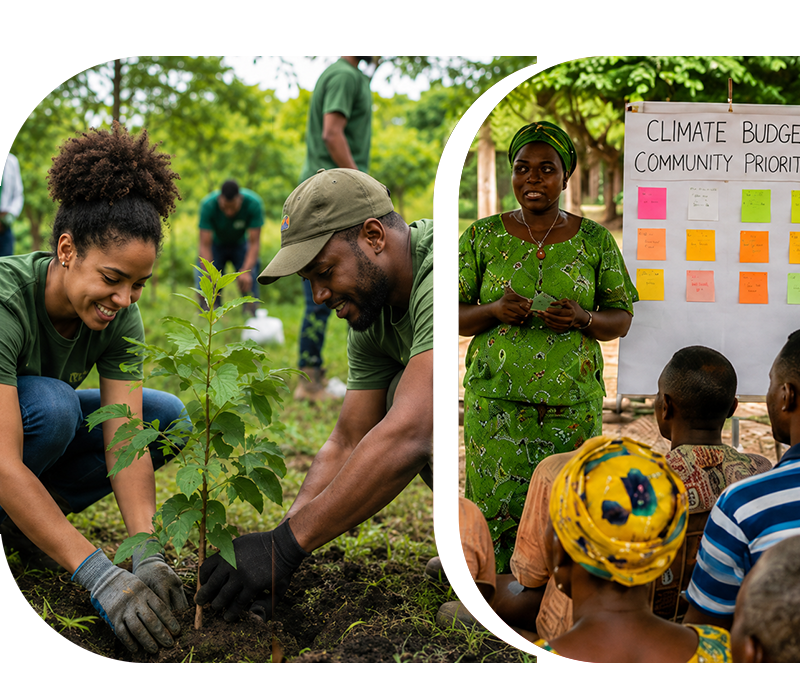
An independent evaluation of the Green Accountability Platform shows that targeted investment in civil society can strengthen the transparency, inclusion, and accountability of climate finance—helping move participation from consultation toward systems change.


Our Mission
As climate finance grows in scale and complexity, the question is no longer only how much money is mobilized. It is whether that finance reaches people, responds to local priorities, and strengthens trust in public institutions.
The Green Accountability Platform was built around a simple but powerful premise: civil society organizations can help make climate finance more transparent, participatory, and effective. They do this by generating credible evidence, opening channels for citizen voice, and linking community priorities to formal climate governance processes.
Implemented with the World Resources Institute, Huairou Commission, and SouthSouthNorth, the Platform supported 25 civil society organizations across Bangladesh, Brazil, Cameroon, Mexico, and Senegal—building a strong civic infrastructure for climate accountability.
What the Evaluation Found
The independent evaluation found that the Platform delivered strong results in a short implementation period.
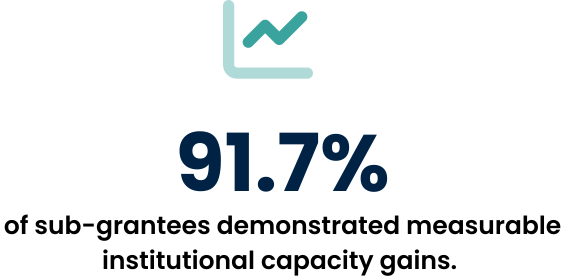
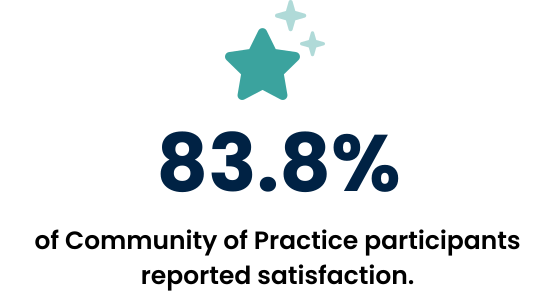
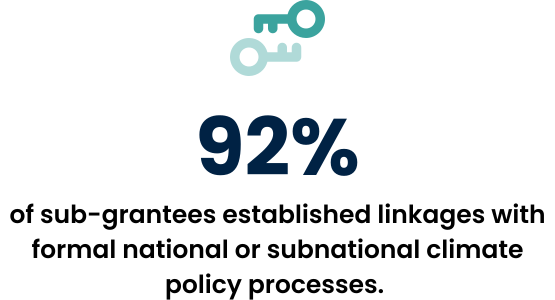
Beyond these headline results, the Platform generated practical examples of accountability in action: statutory municipal budget allocations for climate adaptation in Senegal; forensic analysis that contributed to the removal of misclassified “green” expenditures in Mexico; legal scrutiny around Indigenous consultation and REDD+ programming in Brazil; and participatory climate risk mapping and local adaptation planning in Bangladesh and Cameroon.

These outcomes show that inclusion is not only a procedural requirement. When women, indigenous, local communities, and youth have structured roles in planning, monitoring, and oversight. We see stronger accountability results.
What Comes Next
The evaluation also points to the next frontier for climate accountability. Short implementation periods were sufficient to build tools, relationships, policy access, and proof of concept, but not long enough to fully institutionalize reforms across fiscal, legal, and national governance systems.

A central finding is the need to bridge the “vertical transmission gap”: local accountability innovations do not automatically influence national climate finance decisions unless there are deliberate pathways connecting community evidence to ministries, treasuries, parliaments, and oversight bodies.
This is where the lessons of Green Accountability become especially important for the next phase of CIVIC and a new CIVIC Climate platform. This next phase is about embedding civic innovation and accountability into the systems that shape climate finance itself—through national accountability platforms, stronger links to public financial management and climate budget systems, and longer-term support for the civil society ecosystems that can help make climate action more transparent, legitimate, and durable. We invite partners to join us on the journey to build CIVIC Climate, drawing on these important lessons.